
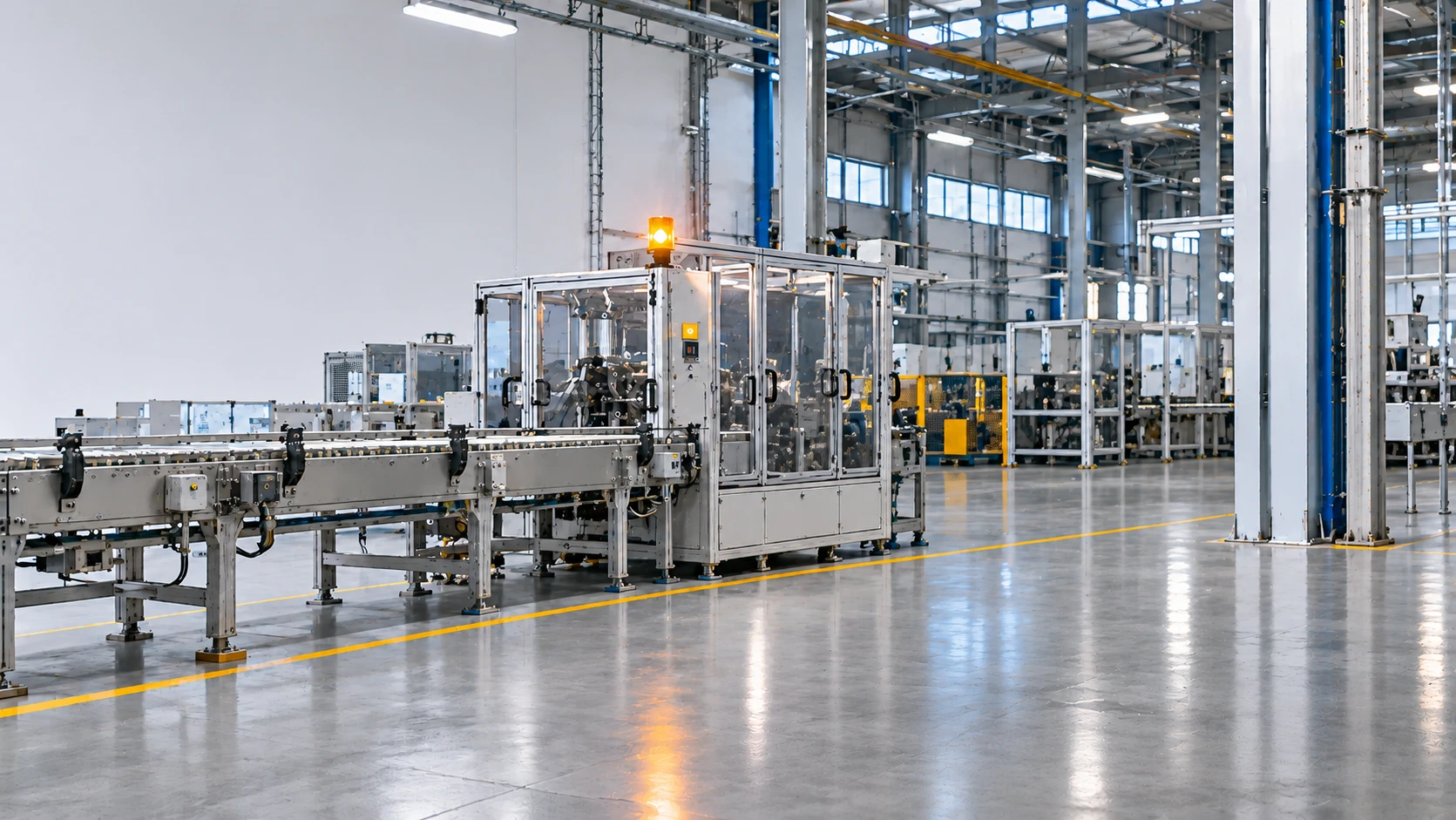
A gearbox is often just one of many components within an industrial plant. However, if it fails unexpectedly, the consequences can be significant: machinery comes to a standstill, production processes are interrupted and delivery deadlines come under pressure.
The actual costs are often not caused by the faulty gearbox itself, but by the consequences of the failure. It is therefore worthwhile for companies to look beyond the mere purchase price when selecting drive solutions.
The hidden costs of a gearbox failure
An unplanned shutdown can result in a whole range of additional costs. The extent of these costs depends, amongst other things, on the plant in question, the production environment and the availability of spare parts.
1. Loss of production and downtime
If a key drive component fails, this can bring entire production lines to a standstill. During this time, no products – or only a limited number – can be manufactured. Particularly in continuous production processes, even brief interruptions can have significant economic consequences.
2. Costs for repair and replacement
In addition to the cost of the replacement gearbox, there are often additional costs for troubleshooting, dismantling, assembly and commissioning. If a replacement component needs to be procured at short notice, express deliveries and special transport arrangements may incur further costs.
3. Additional staffing and organisational costs
Unplanned breakdowns require quick decisions. Maintenance, procurement, production and external service providers must be co-ordinated. Additional working hours or last-minute changes to production planning are often necessary.
4. Delays and potential follow-on costs
If a piece of plant cannot be brought back into operation in time, this can affect downstream processes and delivery dates. In the worst-case scenario, additional costs arise due to delayed deliveries or necessary adjustments to the production process.
Why the lowest purchase price is not always the most cost-effective solution
In industrial procurement, the purchase price plays an important role. However, in the case of gearboxes and other drive components, it should not be considered in isolation.
What is crucial is the total cost over the service life of a component – also known as the Total Cost of Ownership (TCO).
In addition to the purchase price, this includes, amongst other things:
- Energy consumption during operation
- Maintenance and servicing costs
- Availability and cost of spare parts
- Service life and reliability
- Costs of potential production downtime
A gearbox with a lower purchase price may incur higher costs in the long term if, for example, it requires more frequent maintenance, is not optimally suited to the application, or fails unexpectedly.
Conversely, a more expensive solution is not automatically the better choice. The key factor is the balance between technical requirements, operational reliability and cost-effectiveness.
The correct gearbox design as a key factor
Many risks can be mitigated as early as the planning and procurement phase.
It is essential that the gearbox not only transmits the required power but is also suited to the actual operating conditions.
Key factors include, for example, the required torque, the gear ratio, the operating duration, as well as potential load peaks and frequent start-stop cycles.
External influences such as temperature, humidity, dust or specific installation conditions must also be taken into account.
Careful technical design helps to avoid both under-sizing and unnecessary over-sizing. This can have a positive impact on the reliability and cost-effectiveness of the entire drive solution.
Why service and spare parts availability are crucial
Even with careful design and regular maintenance, the risk of a technical failure cannot be completely ruled out. This makes the question of how quickly a system can be brought back into operation in the event of an emergency all the more important.
The availability of suitable spare parts, expert technical advice and appropriate repair or replacement options play a key role here.
For purchasers, this means that when selecting a gearbox supplier, it is not enough simply to compare technical specifications and prices. Long-term service provision and support in the event of a fault are also key factors in a thorough supplier assessment.
Operate more cost-effectively in the long term with the right drive solution
Reliable drive technology begins with the selection of the right components.
Benzlers supports companies in the mechanical and plant engineering sectors in tailoring gearboxes and drive solutions to their individual requirements. In addition to suitable products, technical advice and consideration of application-specific operating conditions play a central role.
The aim is a drive solution that not only works technically but can also be operated economically in the long term.
Conclusion: Consider not just the price, but the overall risk
An unplanned gearbox failure can cost significantly more than the repair or replacement of the affected component.
Anyone who focuses exclusively on the purchase price when procuring equipment may overlook important cost factors.
Appropriate technical design, reliable components and a knowledgeable point of contact can help to reduce the risk of downtime and improve a plant’s long-term cost-effectiveness.
Are you planning a new drive solution or looking to optimise an existing application?
Find out more about Benzlers’ drive solutions and get in touch with our team.


